
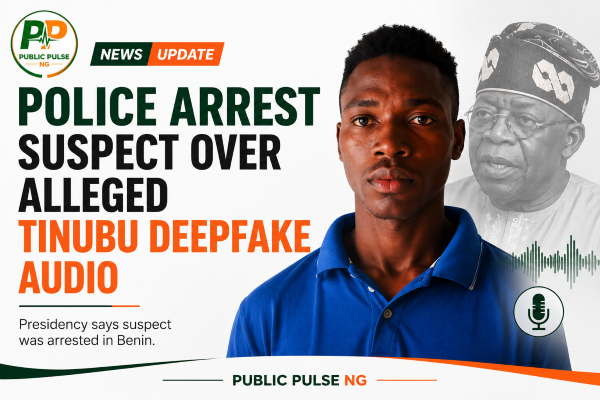
The controversy surrounding the alleged Tinubu deepfake audio has entered a new phase following reports that police have arrested a suspect linked to the creation and circulation of the recording.
Presidential spokesman Bayo Onanuga said an IGP crack team arrested Ifechukwu Dennis in Benin. Authorities linked him to a viral audio clip that circulated online as President Bola Tinubu’s voice.
The audio spread widely on social media. Many users believed it contained comments from the president on insecurity, politics and the 2027 election.
However, the Presidency rejected the recording and described it as digitally manipulated.
How The Tinubu Deepfake Audio Controversy Started
The controversy began after a viral audio clip appeared online. The recording claimed to feature President Tinubu discussing insecurity, elections and opposition figures.
The Presidency denied the authenticity of the recording and warned that manipulated digital content could mislead the public and undermine trust in public institutions.
The debate soon expanded beyond politics as questions emerged about the growing use of artificial intelligence tools to create convincing audio and video content.
Why This Story Matters Beyond Politics
The reported arrest is important, but the bigger issue may be the rise of AI-generated misinformation.
As artificial intelligence becomes more accessible, ordinary citizens may find it harder to distinguish fake recordings from authentic ones.
This creates challenges for:
- Public trust
- Political communication
- Media verification
- Digital security
The spread of manipulated content can influence public opinion before facts are verified.
The Bigger Challenge
The Tinubu deepfake audio case highlights a growing reality facing Nigeria and the wider world.
The question is no longer whether deepfake technology exists.
The question is whether citizens, media organisations and public institutions are prepared to identify and respond to manipulated digital content before misinformation spreads.
As investigations continue, Nigerians will watch for more details about the suspect, the source of the recording and any possible charges.
For now, the case serves as another reminder that verifying information before sharing it has become more important than ever in the digital age.



[…] Police Arrest Suspect Linked to Tinubu Deepfake Audio […]